
Japan is often described in terms of contrasts, yet real life here rarely separates itself so neatly. Cities don’t signal where one way of living ends and another begins; they simply blend. A narrow path slips out beside a busy street. Stillness appears without warning. Movement eases, then quickens again, without anyone consciously choosing the shift.
Kyoto and Tokyo are frequently presented as opposites, yet moving between them reveals something subtler. What changes is not meaning, but pressure. Attention is shaped differently. Space asks for different responses. In both places, behaviour adjusts before thoughts catches up. You learn how to move not by instruction, but by repetition.
Moving Through the Country Without Resetting
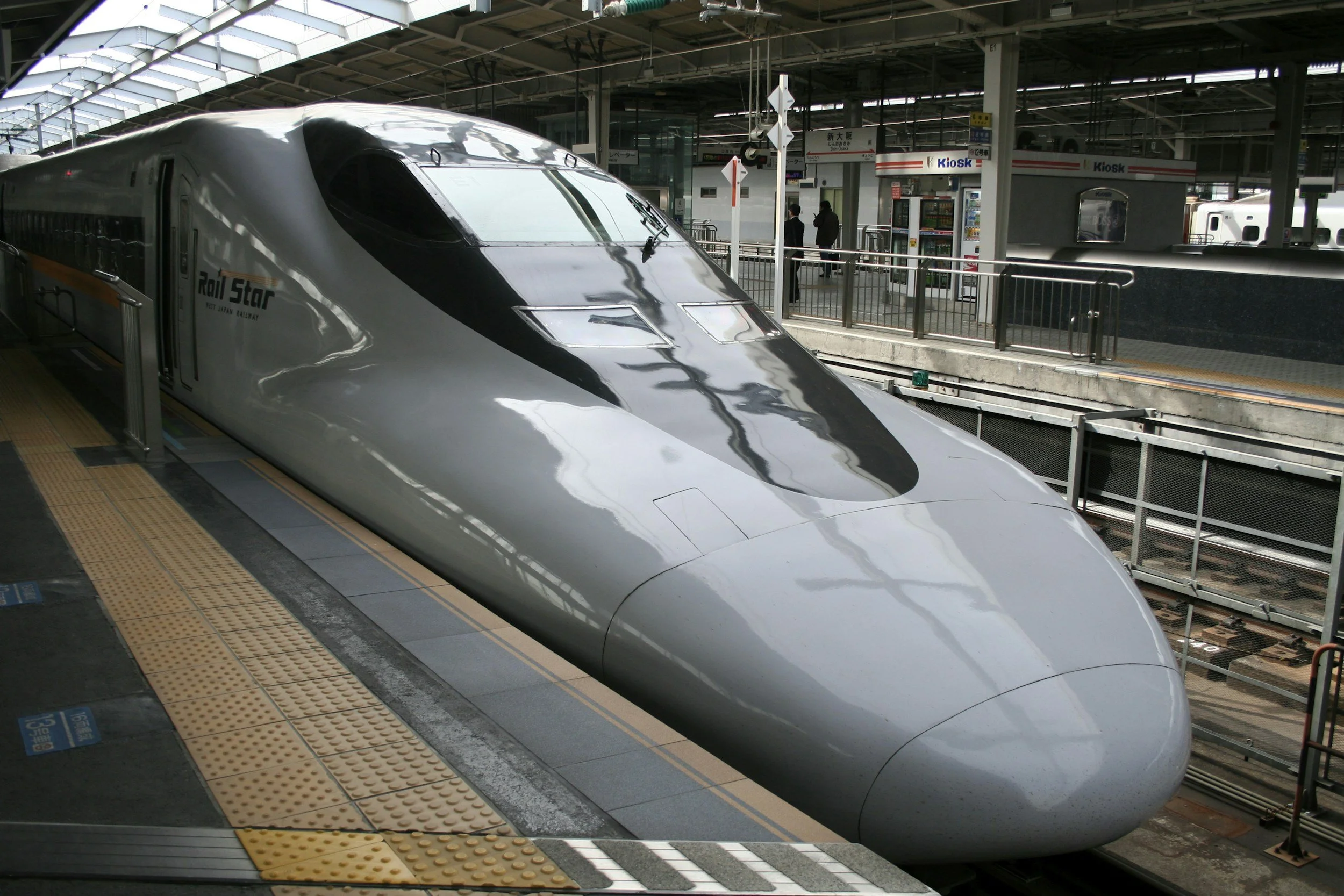
Travel in Japan often feels less like transition and more like continuation. Distance shortens quietly, without demanding attention. Riding the Osaka to Tokyo train, you notice how little needs to change - posture adjusts, pace recalibrates, but the underlying rhythm holds. Speed compresses geography without compressing awareness, allowing one city’s tone to dissolve gently into the next before you have fully let go of where you were.
Kyoto Arrives Gradually
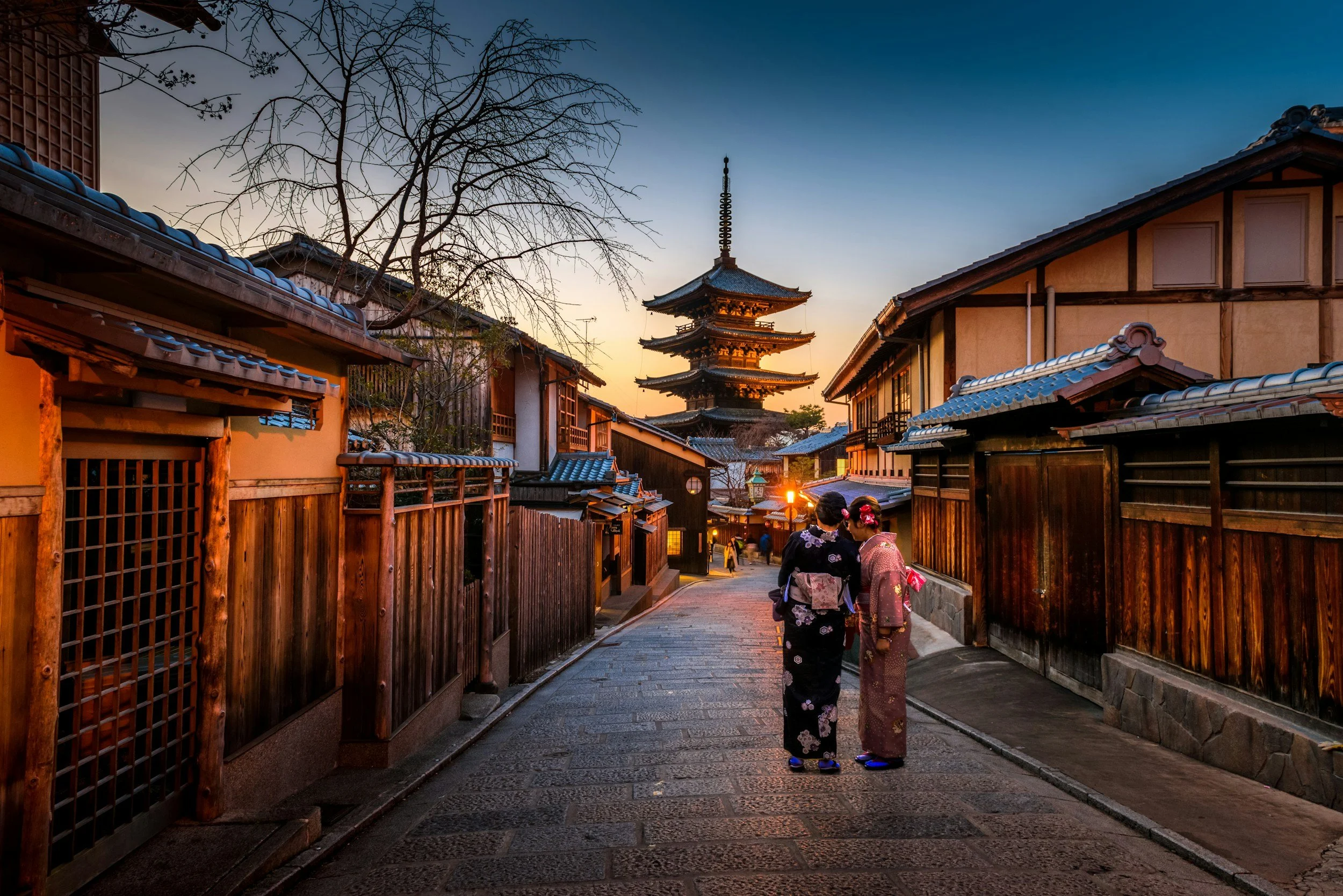
Kyoto does not frame itself as an event. Streets remain low and measured. Sound stays contained. You can walk for some time before feeling certain that you have arrived anywhere at all.
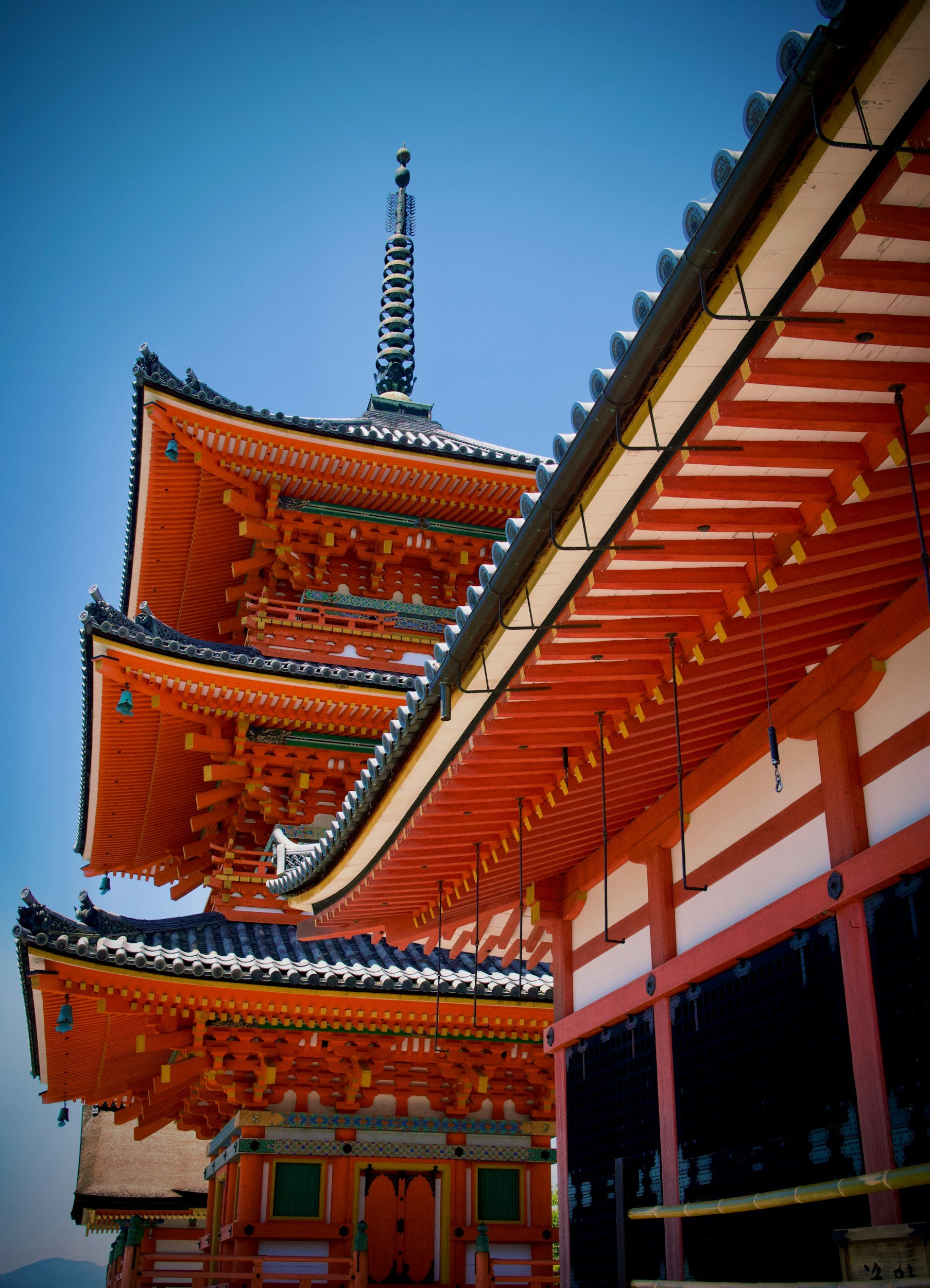
In Kyoto, sacred and ordinary spaces sit close together without hierarchy. A shrine entrance appears beside a residential street. A temple wall runs quietly behind shops still opening for the day. The city does not separate ritual from routine.
Attention sharpens slowly, almost without consent.
The Beginning That Isn’t Marked
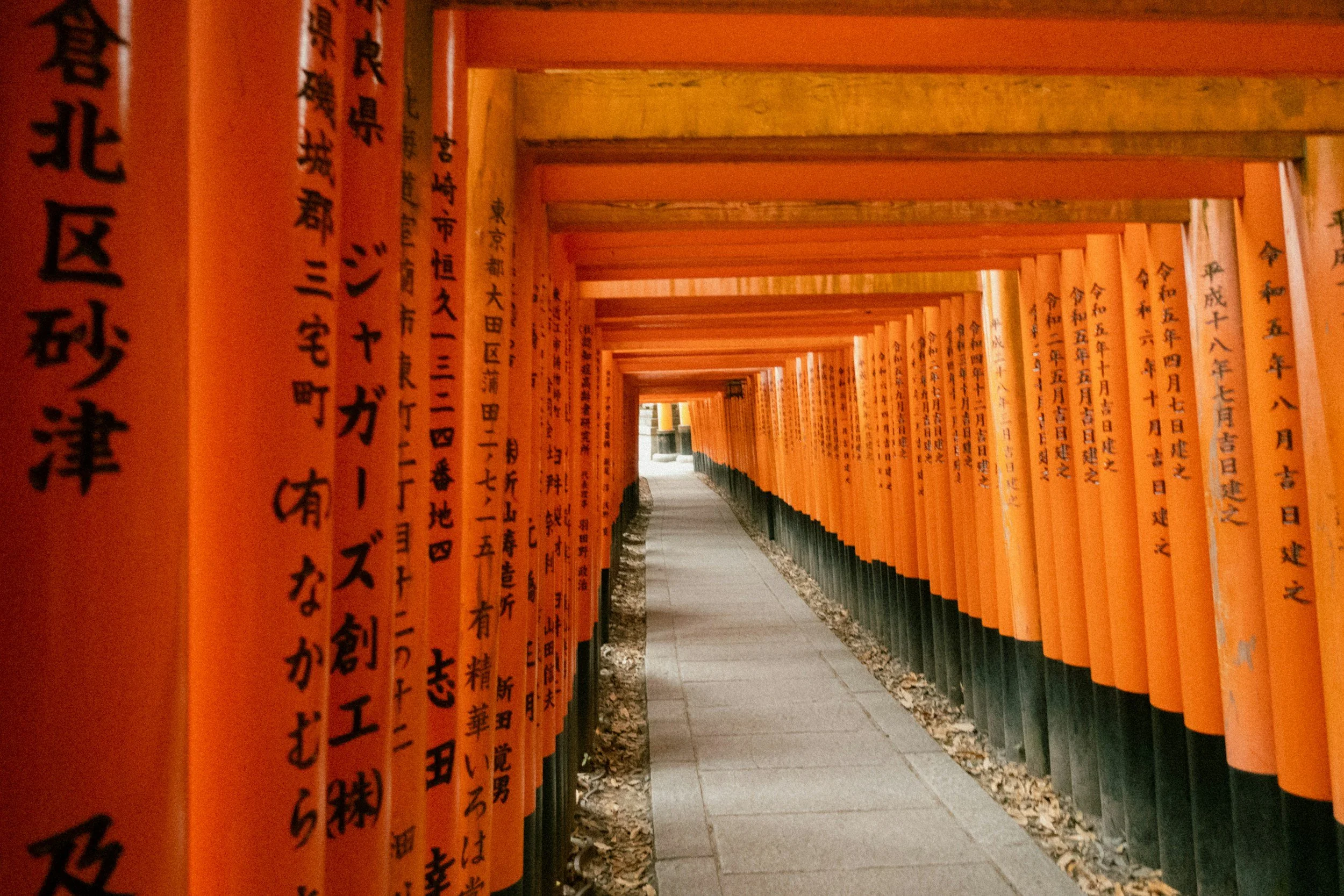
Approaching Fushimi Inari does not feel like reaching a destination. The first gates appear casually, as though they have always been part of the path. You pass under one, then another, without stopping.
The route rises gently. Gates repeat. Steps follow one another closely enough that distance becomes secondary. You continue because continuing feels appropriate.
There is no clear moment of entry.
Walking as the Main Act
At Fushimi Inari, walking becomes its own purpose. You’re not heading toward a single destination; you’re moving through a sequence that makes no demand to be finished.
Torii frame each step. Light tilts and softens. Sound thins, then gathers again. Nothing asks you to stop, and nothing urges you on.
If meaning appears, it does so obliquely, almost by accident.
Ritual Without Performance
Despite its recognition, the space rarely feels theatrical. Voices lower naturally. People step aside without instruction. Gestures repeat quietly, a pause, a bow, a brief stillness.
Ritual here is practiced rather than presented. The path itself shapes behaviour through repetition, not explanation.
Sacredness settles into habit.
Narrowing Attention Through Repetition
As the path continues upward, distraction fades. The repetition of gates removes the urge to look ahead. You stop measuring progress. Awareness pulls closer to the present step.
Slowing happens without decision. The space does not demand reverence. It simply rewards focus.
Kyoto shapes attention through constraint.
Leaving Without Departure
Leaving Kyoto does not feel like closing a chapter. Streets lead away quietly. The rhythm lingers longer than expected.
The Kyoto to Tokyo high-speed train carries that tone forward without resetting it. Speed exists, but it does not dominate awareness.
Inside the carriage, time loosens. People read, rest, or sit quietly. Arrival feels anticipated rather than achieved.
Tokyo as Ongoing Accumulation
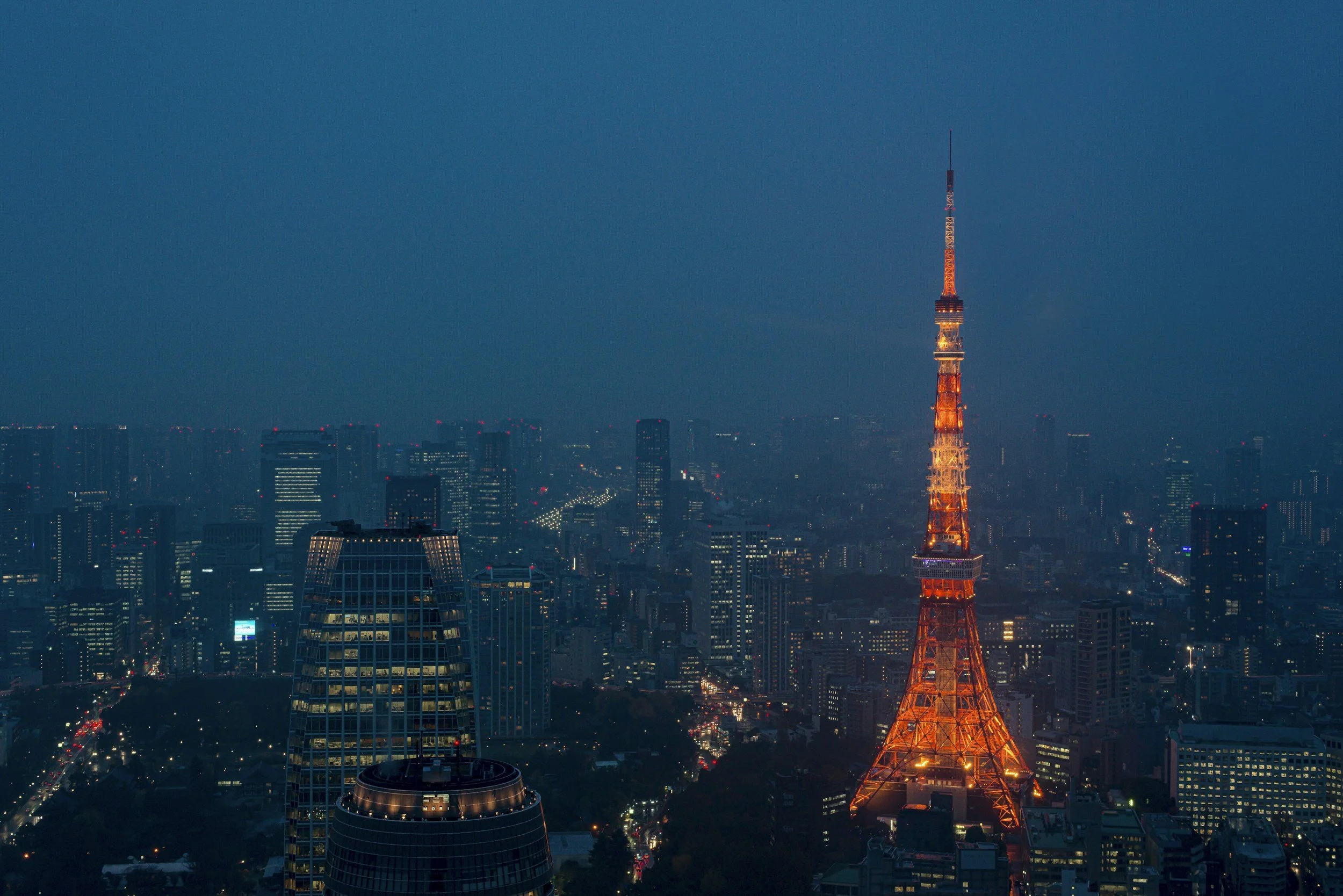
Tokyo does not settle into a single rhythm. It gathers instead. Density increases and releases in cycles. Neighbourhoods change character without warning.
In Tokyo, attention is pulled outward. Light reflects off surfaces. Sound layers. Movement overlaps. The city does not ask you to focus on any one thing.
Patterns emerge only through use.
Shibuya as Shared Visibility
The crossing at Shibuya is often framed as a spectacle, yet standing within it reveals something else entirely. Movement resolves itself cleanly. People step forward together, then separate without friction.
In Shibuya Crossing, coordination replaces chaos. Everyone understands the sequence. No one needs instruction.
The crossing works because it is repeated constantly.
From Event to Reference
What happens quickly is familiarity. Locals cross without looking up. Visitors pause once, then move on.
The spectacle dissolves into routine. The crossing becomes reference rather than destination, something you pass through repeatedly, no longer needing attention.
Familiarity softens intensity.
Quiet and Noise as Neighbours
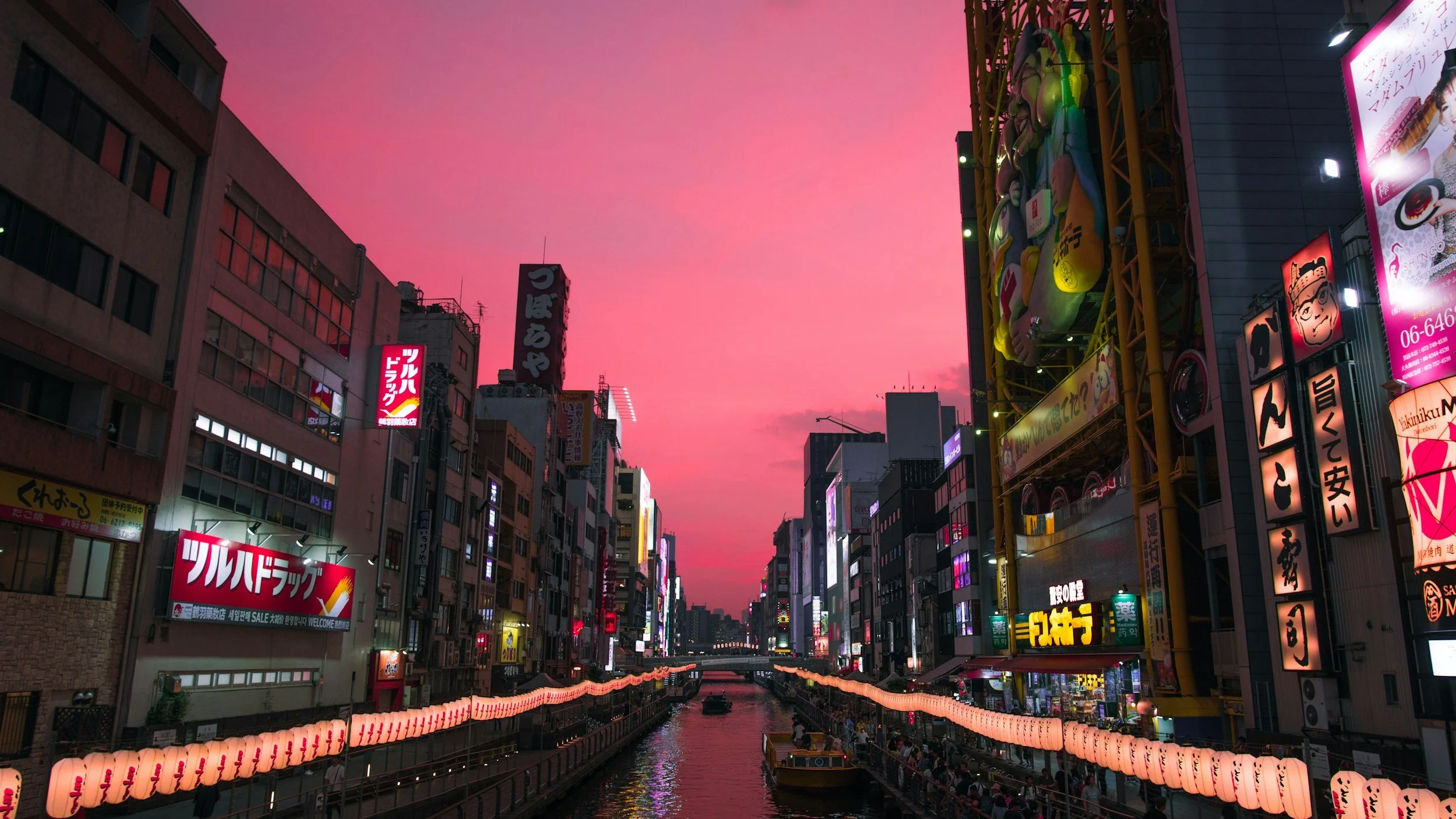
One of the defining qualities of Japanese cities is how easily quiet and noise coexist. A crowded street opens into a calm passage. A shrine entrance appears beside a flashing sign.
These transitions are not dramatic. They feel expected. You adjust instinctively, without marking the change.
The city trusts you to find the correct tempo.
Behaviour Guided by Space
Fushimi Inari and Shibuya appear to occupy opposite ends of an imagined spectrum, yet both shape behaviour through space rather than rule.
One slows movement until attention sharpens. The other accelerates it until coordination takes over. Neither demands reflection. Both produce it indirectly.
The contrast lies in pressure, not purpose.
Repetition as the Shared Language
In Kyoto, repetition appears through gates, steps, and gradual ascent. In Tokyo, it appears through crossings, signals, and familiar routes.
Repetition builds comfort. Comfort reduces friction. Navigation becomes instinctive.
The cities become legible through use.
Adjustment Without Awareness
Only later do you realise how often you adapted. How your pace shifted without decision. How your posture changed entering a crowd. How silence felt fuller than noise in certain moments.
These adjustments did not announce themselves. They accumulated quietly.
You learned without being taught.
Sacred and Secular Without Division
Japan does not insist on separation between ritual and routine. Shrines remain active within cities built for speed. Crossings exist beside spaces that still pause for tradition.
Neither cancels the other. They coexist through habit.
Balance emerges without planning.
What Persists After Movement Ends
What stays with you is not the contrast itself, but the continuity underneath it. The way movement shaped behaviour. The way space guided attention without instruction.
Fushimi Inari and Shibuya remain distinct, but connected. One narrows focus through repetition. The other widens awareness through density.
Together, they reveal a city logic that values flow over explanation, use over display. Japan does not ask you to choose between stillness and motion. It allows both to repeat until they feel natural to move between, quietly, without needing to be named.