
Historic Squares of Western Europe: Trafalgar, Place de la Concorde, and Dam Square
Public squares are the places cities use to make statements about themselves - about power, memory, and how much space they're willing to give to the public. Trafalgar Square, Place de la Concorde, and Dam Square each make those statements in different registers, and reading what they say tells you something about the cities around them.
Place de la Concorde, Paris
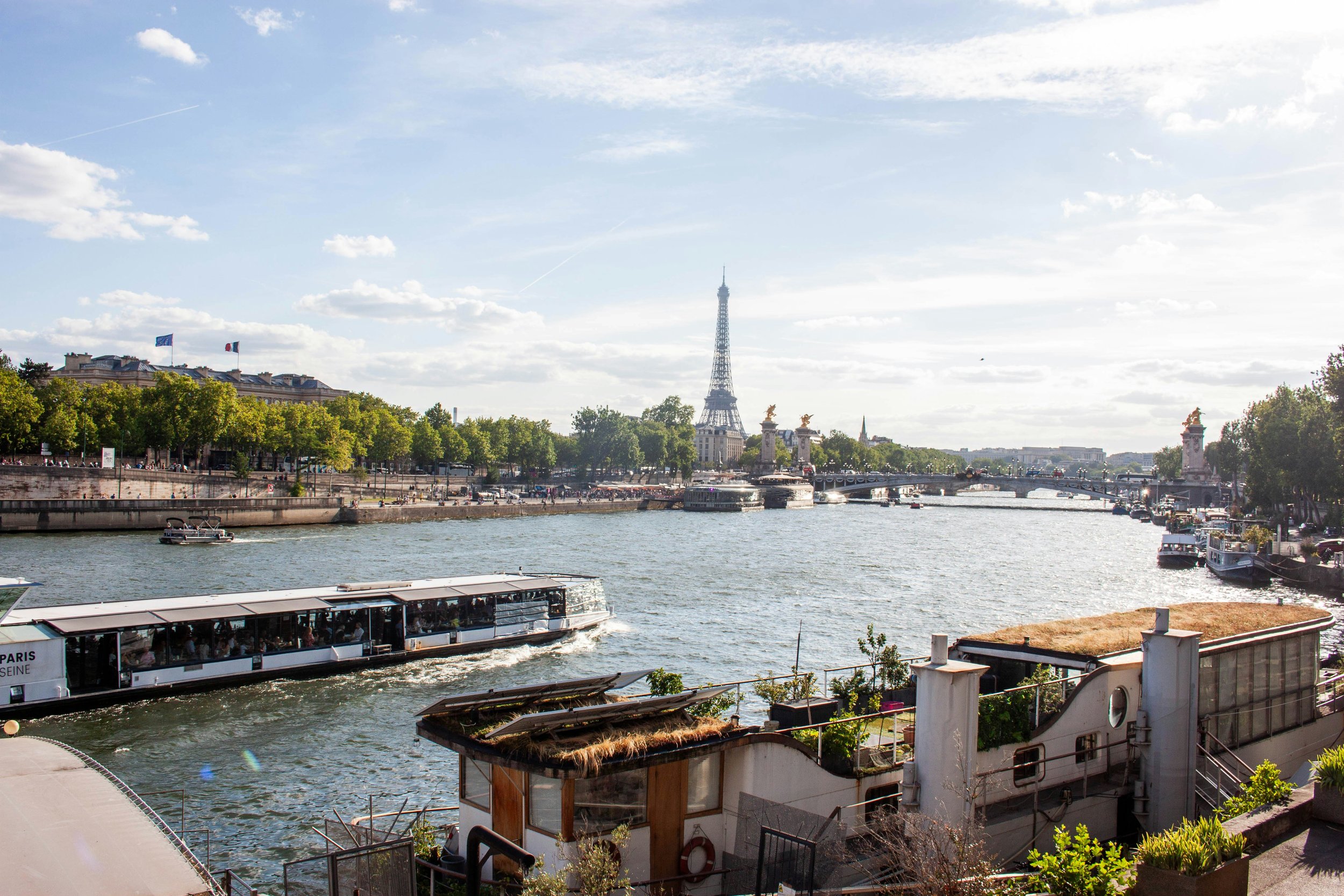
Place de la Concorde occupies 8.6 hectares between the Tuileries Garden and the Champs-Élysées, making it the largest square in Paris. Its history is more compressed and more violent than its current appearance suggests: this is where the guillotine stood during the Revolution, where Louis XVI, Marie Antoinette, and around 1,100 others were executed between 1793 and 1795. The square was renamed Concorde (harmony) in 1795 specifically as an act of renaming away from that history, and the subsequent 200 years of Haussmann-era architecture, tourist infrastructure, and the steady normalization of the space as a transit point and viewpoint have layered over the original associations to the point where most visitors experience it primarily as geometry. The geometry is worth attending to. The Luxor Obelisk at the centre - a 23-metre pink granite column from the Temple of Ramesses II, given to France by Egypt in 1829 and erected in 1836 - is the oldest monument in Paris.
The Paris to London train tickets for the Eurostar through the Channel Tunnel can be booked well in advance and prices vary significantly by booking date; the journey takes around two and a half hours from Paris Gare du Nord to London St Pancras. Combining Paris and London in a single trip by train rather than flying gives you both city centres without the friction of airports on either end, and the approach to Paris from the north by rail, through the Seine-Saint-Denis suburbs, gives an honest picture of the city's full geography rather than the tourist centre alone.
Trafalgar Square, London
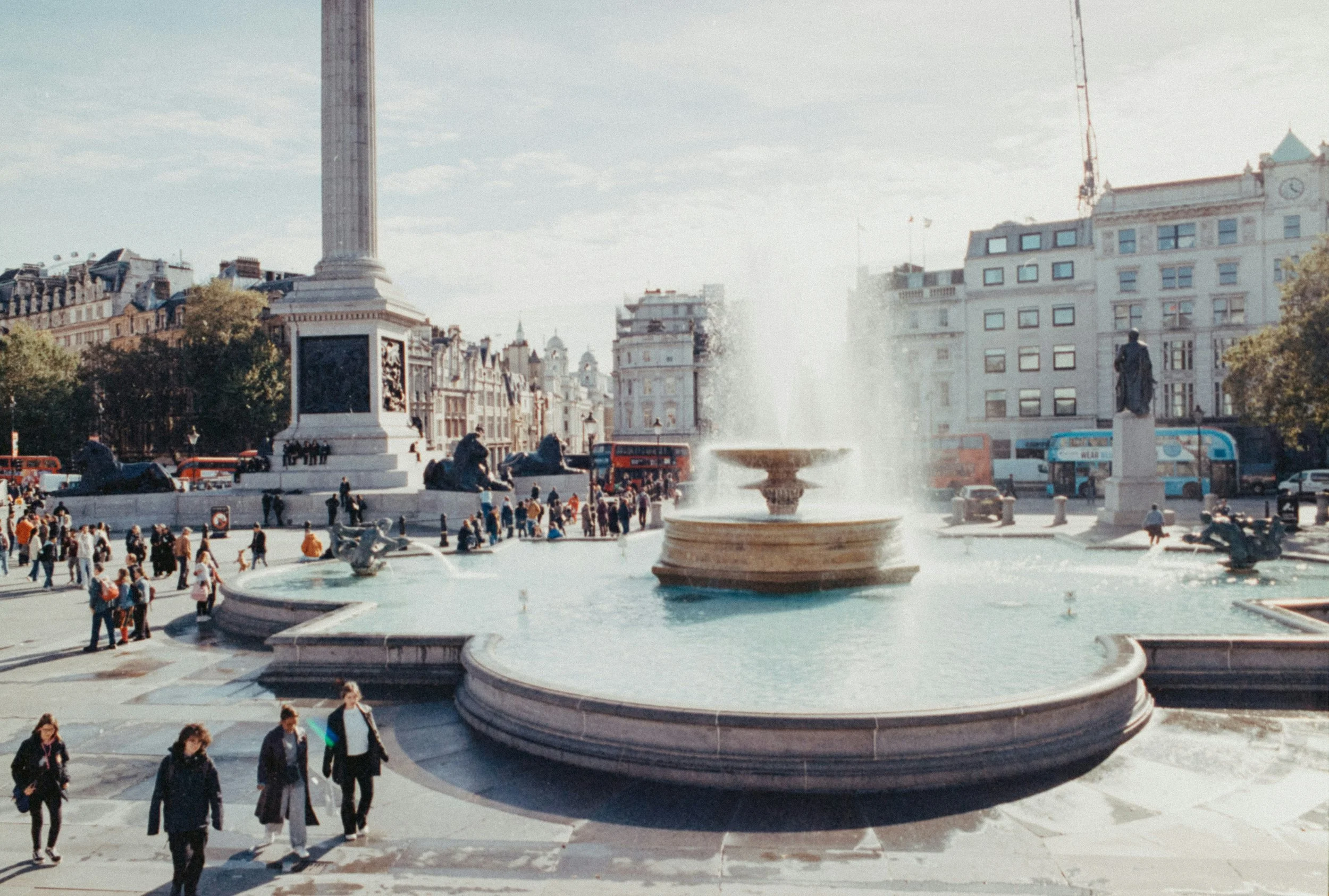
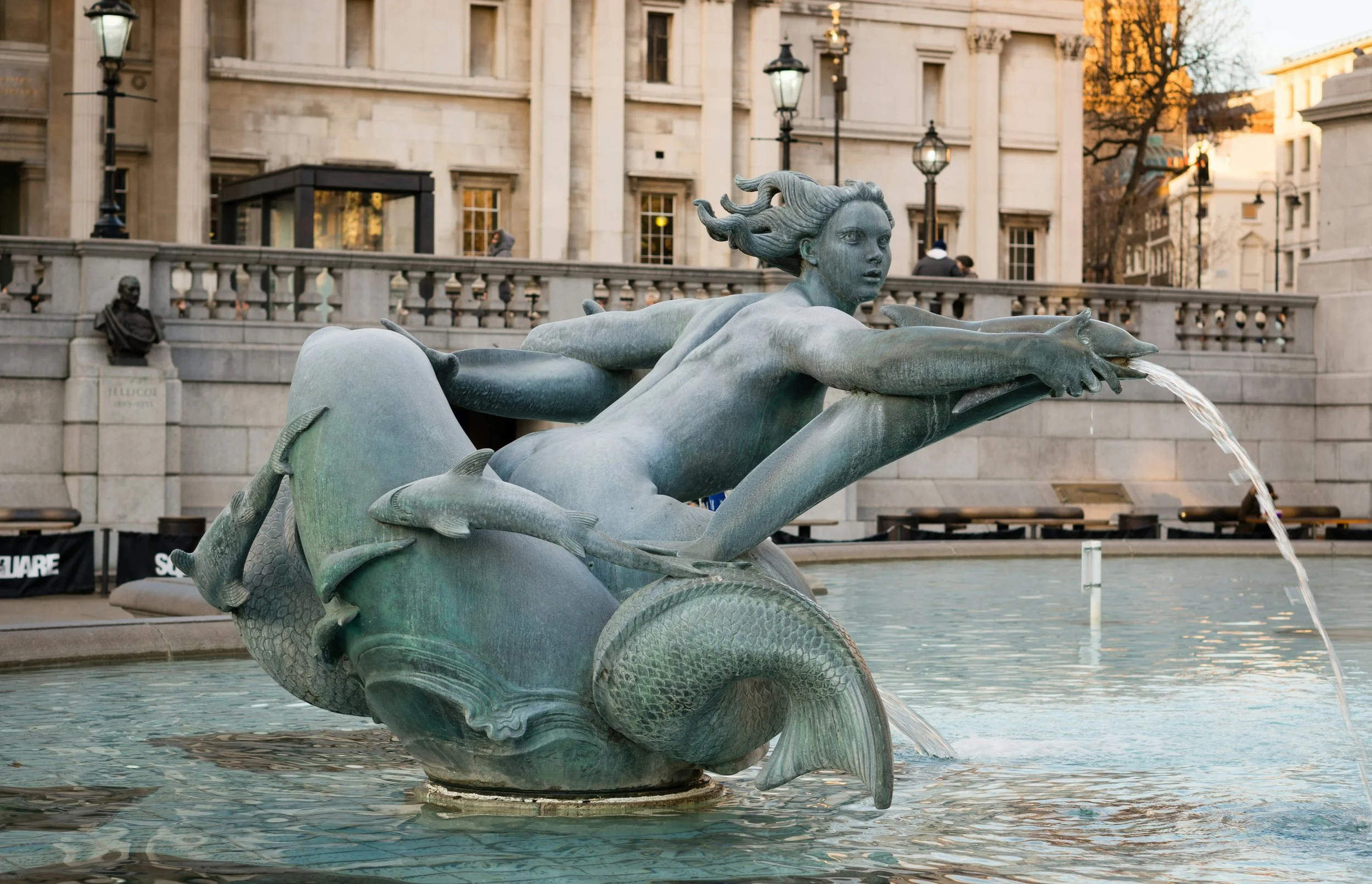
Trafalgar Square was completed in the 1840s and named to commemorate the 1805 naval battle that established British maritime dominance for the following century. Nelson's Column - a 52-metre granite shaft topped by a 5.5-metre statue of Admiral Nelson - is the obvious focal point, flanked by four bronze lions that were added in 1867. The column's height was specifically calculated to be visible from the Thames to the south and from the Mall to the north, embedding the monument into the city's sightlines in a way that makes it hard to approach the square from any direction without encountering it first.
The square's current character is significantly different from its 19th-century form. The north terrace was pedestrianised in 2003 and the connection to the National Gallery strengthened; the fourth plinth, which stood empty from its installation in the 1840s until 1999, now rotates contemporary art commissions on a two-year cycle, introducing a constantly changing contemporary element into a space dominated by Victorian permanence.
For visitors arriving from the continent, the London to Amsterdam by train journey through the Channel Tunnel, with a connection at Brussels, takes around five hours and deposits you at St Pancras International, from which Trafalgar Square is around 20 minutes by tube.
Dam Square, Amsterdam
Dam Square sits at the historical and literal centre of Amsterdam - the dam on the Amstel river that gave the city its name was built here in the 13th century, and the square that developed around it became the commercial heart of the Dutch Golden Age. The Royal Palace on the western side of the square was built as the city hall in 1655, when Amsterdam was the wealthiest trading city in the world, and the scale and decoration of the building reflect that confidence directly. The architect Jacob van Campen modelled it on Roman civic architecture, and the interior - the marble-floored Citizens' Hall with its maps of the world inlaid in the floor - makes the ambition of the project clear even in its current role as a working royal palace open to visitors.
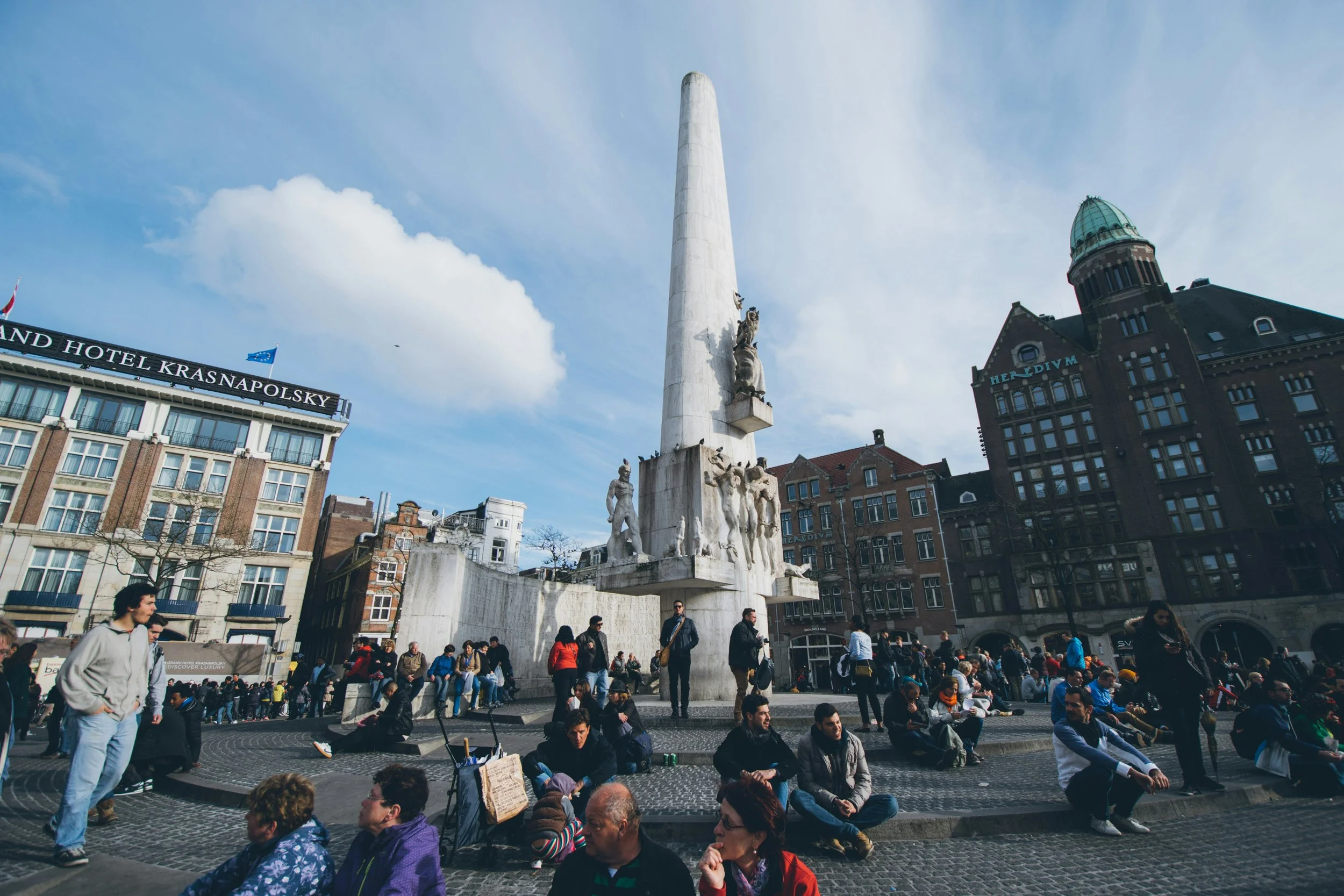
The National Monument on the eastern side of the square is a 22-metre white stone obelisk erected in 1956 to commemorate Dutch civilians killed in the Second World War; the urns at its base contain soil from each of the Dutch provinces and from Indonesia (then still the Dutch East Indies). The juxtaposition of the 17th-century palace, built at the peak of Dutch global power, and the 20th-century war memorial, built at the point of the country's deepest vulnerability, gives Dam Square a historical layering that most European city squares don't achieve in the same concentrated form.
Amsterdam beyond Dam Square organises itself logically around the concentric canal ring built in the 17th century, and the square is a useful starting point for walking in any direction. North leads to the harbour and the IJ waterfront, now redeveloped with the EYE Film Museum and the A'DAM Tower across the water. West leads through the Jordaan, the former working-class neighbourhood that has become one of the most appealing areas in the city for independent shops and restaurants. East leads toward the Jewish Historical Museum and the Rembrandt House, where the painter lived during his most productive years and where the reconstruction of his studio and living quarters gives an unexpectedly specific sense of how he worked.
What the Three Squares Share
The comparison across these three squares is not symmetrical. Trafalgar is an imperial monument in a city that is slowly renegotiating what that heritage means. Concorde is a deliberate act of forgetting dressed in geometry. Dam Square holds the contradiction between Dutch Golden Age confidence and 20th-century suffering in uneasy but honest proximity. All three are places where cities decided to use large amounts of central space to make public statements, and all three have been modified by subsequent history in ways that complicate the original intention. That gap between what was intended and what the square now means is where the interesting questions live.
Conclusion
The most useful way to experience any of these squares is to return at different times of day. The morning crowd, the lunchtime transit, the evening gathering, and the early-morning emptiness each reveal something different about how the space actually functions in the city around it. A square that appears merely ceremonial at noon often turns out to be genuinely alive at 7am or 10pm, and that quality of use is the most honest measure of whether a public space has succeeded on its own terms.